
EEF Guidance on Effective Use of TAs

Week 1 – The Evidence Base: Why TA Deployment Matters
Teaching assistants can make a significant contribution to pupils’ learning, but impact depends on how their role is planned and deployed. Research shows that simply providing more adult support does not automatically lead to better outcomes. In this session, we’ll explore the evidence around effective TA deployment and consider how thoughtful use of teaching assistants can complement high-quality teaching, promote independence and improve outcomes for pupils.

Week 2 – Recommendation 1: Access to High-Quality Teaching
Every pupil should have access to high-quality teaching from their classroom teacher, including those who need additional support. Teaching assistants should supplement, rather than replace, teacher-led instruction. In this session, we’ll explore how thoughtful TA deployment can keep pupils connected to whole-class teaching, maintain high expectations and ensure additional adult support strengthens rather than unintentionally limits access to learning.

Week 3 – Recommendation 2: Scaffolding & Pupil Independence
Effective TA support should help pupils become more independent, not more reliant on adult help. Carefully chosen scaffolds, prompts and questions can provide just enough support for pupils to move forward while keeping the thinking with the learner. In this session, we’ll explore how TAs can gradually reduce support, encourage productive struggle and build pupils’ confidence to tackle learning independently.

Week 4 – Recommendation 3: Evidence-Based Structured Interventions
Targeted interventions can make a valuable contribution to pupils’ progress when they are carefully selected, structured and delivered consistently. In this session, we’ll explore how teaching assistants can deliver evidence-based interventions effectively while ensuring they complement, rather than replace, high-quality classroom teaching and remain closely connected to pupils’ wider learning.

Week 5 – Recommendation 4: Preparation & Training for Effective Deployment
Teaching assistants are most effective when they have the right information, preparation and professional development to fulfil their role confidently. Clear communication between teachers and TAs helps ensure support is purposeful, consistent and closely connected to classroom learning. In this session, we’ll explore how effective preparation, collaboration and training can strengthen TA deployment and maximise its impact on pupils.
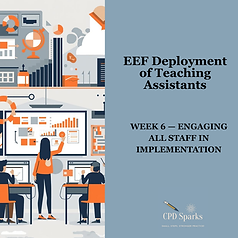
Week 6 – Recommendation 5: Engaging All Staff in Implementation
Effective TA deployment is a whole-school responsibility, not something that sits with teaching assistants alone. Sustainable improvement requires leaders, teachers and TAs to share a clear understanding of roles, expectations and effective practice. In this final session, we’ll explore how collaboration, communication and a consistent whole-school approach can embed effective TA deployment and ensure support has the greatest possible impact on pupils.